

Deloitte. Sullivan & Cromwell. Now EY. Three organisations, three contexts, the same essential failure. At some point, the pattern becomes the story – and the story isn't about AI hallucinations.
AI fluency will matter in the workplace. But as AI-native graduates begin entering organisations in larger numbers, employers are starting to ask a deeper question: what skills become more valuable when technology can generate answers instantly?
As AI becomes more embedded in executive decision-making, a deeper question emerges: if a leader changes direction because AI suggests something different, who owns the decision? A reflection on judgement, accountability, and the communicator’s role.
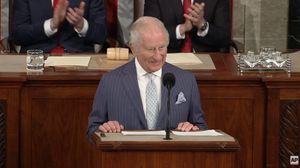
King Charles's address to Congress was months in the making – a carefully crafted collaboration between Buckingham Palace, Downing Street and the Foreign Office. But the most interesting question isn't what he said. It's how the speech was made.
Everything was in place – policies, training, guardrails. And still, AI errors slipped through. This isn’t a technology failure but a human one. Perhaps the answer is simple: someone must own verification.
You enter an award contest to win. So why do so many strong entries fall short? They fail not because the work was poor, but because the entry was. After 15 years as a judge, here's what I've learned, and what every entrant needs to know before they hit 'submit.'
I've been deep in ChatGPT since 2022. Now I'm running a deliberate, staged experiment with Claude Pro – and one feature in particular, Cowork, has genuinely surprised me. It has my full attention as I continue working it out.
In an AI-enabled environment, the greatest reputational risk isn't AI making mistakes. It's organisations hiding behind AI to avoid responsibility. The answer lies in human-centred AI – and it's where communicators have a distinctive role to play.