
In July, I thought I had suffered a bad bout of heat exhaustion.
The immediate effects passed in August, but I didn't get well. A persistent respiratory illness, coughing and debilitating fatigue remained, prompting increasingly detailed medical investigation into what was actually going on.
Two months later, I have had chest X-rays, a CT scan, repeated blood tests, iron supplements, consultations and three courses of antibiotics. The latest course began last week and will continue for six weeks.
Treatment continues alongside those investigations. What looked at first like an interruption has become something rather longer.
The most significant consequence has been simpler to describe. I stopped all my activities. Not slowed down. Not reduced my commitments. Stopped.
There have been just three new blog posts since July. No social media activity. For a period, almost no engagement with the professional world at all. I stopped regularly recording podcasts with Shel. I stepped away from voluntary commitments and other activities. Eventually, I began cancelling things that had been in the diary for months.
One of the hardest decisions was withdrawing from the United Partners Network Retreat in Barcelona next month.
I had been looking forward to it enormously. Over several months, Maria Gergova and I had developed a session combining a fireside conversation with a mini-hackathon around growth, AI, governance, trust and the changing communications business.
It was exactly the kind of conversation I enjoy.
But eventually enthusiasm stopped being relevant.
I had to acknowledge that I simply couldn't know whether I would be fit enough to travel to Barcelona, let alone bring the energy the event deserved.
That was difficult to accept.
When the answer isn't immediate
The curious thing about illness is how quickly uncertainty becomes normal.
At first, you assume there will be an answer. A test will identify the problem. A prescription will deal with it. A few days or weeks later, things will return to normal. Sometimes that happens. Sometimes it doesn't.
Instead, one investigation leads to another. Blood tests are repeated. Another scan is arranged. Another doctor becomes involved. Treatment changes. You wait for results.
And ordinary life continues around it all.
You find yourself living in an odd middle ground: clearly not well, but without the neat explanation that would allow you to say, "This is what is wrong, and this is when it will be fixed."
I've discovered that uncertainty can be more exhausting than I expected.
The NHS paradox
I've also spent considerably more time with the NHS during the past couple of months than I have for many years.
My experience with the National Health Service has reinforced a contradiction that I suspect will be familiar to many people in the UK.
The clinical care has been outstanding.
I have encountered thoughtful doctors, nurses and other healthcare professionals who listen, investigate and clearly want to understand what is happening rather than reach for the quickest explanation.
I have considerable confidence in the people treating me. But the machinery surrounding them can feel rather different.
Appointments, test results and communications do not always connect as smoothly as you might expect. Information can arrive in unexpected ways, or not arrive when you think it should. My NHS app sometimes contained letters and other content clearly meant for medical staff, not the patient. Different parts of the system can appear to know different things. Overall, the dots sometimes don't appear joined up.
At times, being a patient feels surprisingly like becoming the project manager for your own healthcare.
That isn't a criticism of the people doing the work. If anything, it has made me appreciate them more. It is simply the strange contrast between very capable professionals working inside a system that can make communication unnecessarily difficult.
For someone who has spent most of his professional life thinking about communication, that has been impossible not to notice.
When choice disappears
Another aspect of this experience has made me think about work differently.
We talk a great deal about choice.
We discuss priorities, productivity, work-life balance, boundaries and intentional working. We decide which projects matter and which meetings we can decline. We try to design our working lives around the things we value.
I have thought about many of those questions myself over the past couple of years.
But all of that assumes you have a choice. Illness has a remarkably efficient way of taking that away. The question stops being, "What should I prioritise?" It becomes, "What am I actually capable of doing?"
For several weeks, my answer was very little.
That was not a strategic decision. It wasn't a digital detox. I wasn't taking a sabbatical or experimenting with a healthier relationship with social media. I simply didn't have the energy or inclination to participate. And when you reach that point, some decisions make themselves.
The podcast can wait. The article can wait. LinkedIn can wait. Even commitments you care deeply about may have to wait.
Not a comeback
I am writing this while still undergoing medical investigation and treatment. It isn't one of those stories in which illness conveniently provides a dramatic opening before the writer announces that everything is now fine. It isn't. Nor do I have a tidy list of lessons to offer.
What I do have is a growing sense that I am beginning to look outward again. I'm reading more. Thinking more. Paying attention to conversations that I had largely stopped following. Podcasting is again a top interest – yesterday, I recorded the September long-form episode of the For Immediate Release podcast with Shel. It will be up on Monday 28 September.
And, evidently, I have started writing again.
That feels significant.
I don't yet know when normal service will resume. I'm not even sure that "normal service" is quite the right ambition.
I think the more useful question is what I want to pick up again when I have the energy to do so – and what I might decide can remain where I left it.
For now, the treatment and investigations continue. Everything else can wait a little longer.
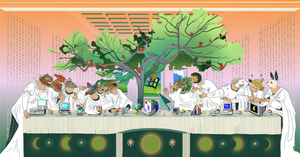
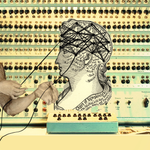
(The AI-generated image at the top of this post was created with ChatGPT.)