A few years ago, one of the most common pieces of advice about generative AI was that success depended on learning how to write good prompts.
There were prompt libraries, prompt frameworks, prompt engineering guides, and countless articles promising better results if only you knew the right formula. The quality of the output seemed closely tied to the quality of the instructions.
That certainly matched my experience when I first began experimenting with AI image generation in 2022/2023.
Back then, creating an image often felt like operating a machine. You had to think carefully about what you wanted, describe it in detail, and then refine the result through repeated iterations. If the image wasn't right, the assumption was usually that the prompt wasn't right.
The burden sat largely with the human.
Today, though, I found myself reflecting on a conversation with ChatGPT Pro that made me realise something had changed.
From prompting to discussing
The conversation began a weekend ago with a simple task. I wanted to refresh the banner image at the top of my LinkedIn profile. The banner I was using looked perfectly acceptable, but after living with it for a while I felt it no longer reflected what I wanted.
What struck me wasn't the image that eventually emerged. It was the process.
I wasn't writing prompts. In fact, I spent remarkably little time describing the image I wanted. Instead, I was explaining what I was trying to achieve with a new image.
We remembered working together in 2024, when ChatGPT helped me create a new banner image using visual suggestions that I eventually used in Adobe Photoshop. That was definitely from a series of prompts, certainly not a conversation.
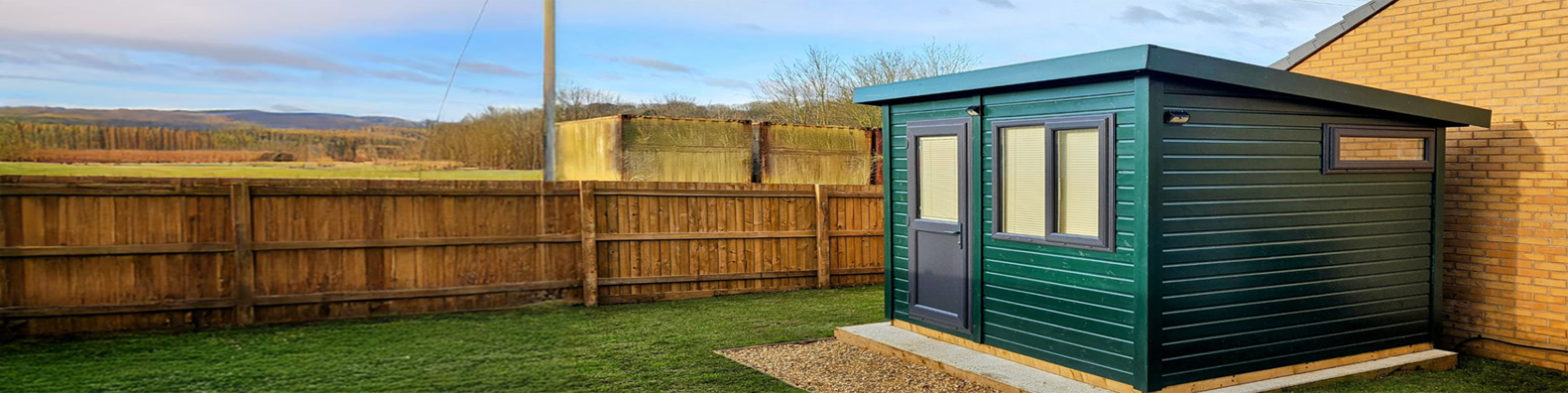
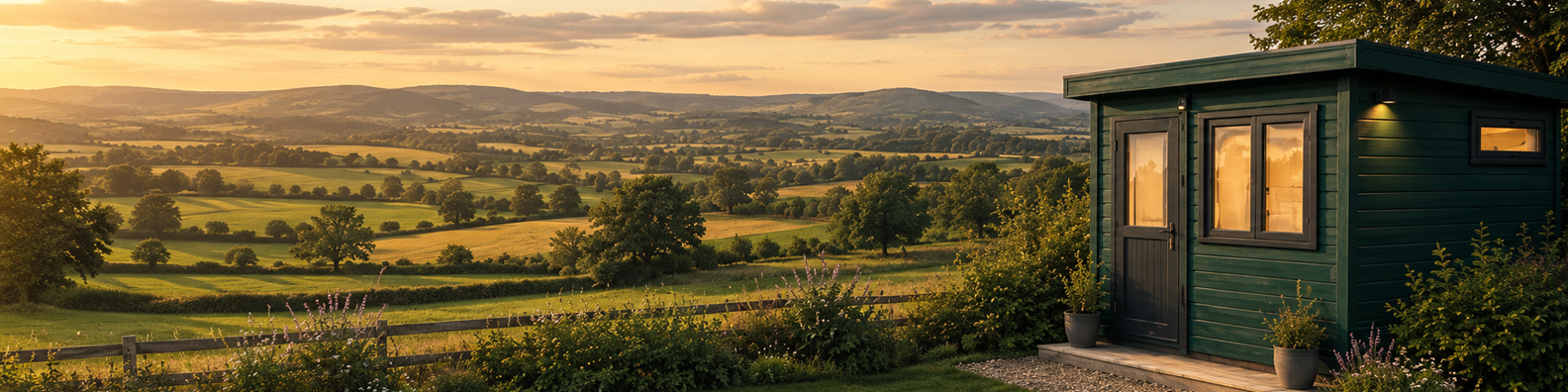
Last weekend, I talked to the AI about why a particular image mattered to me. I explained the significance of my garden studio and how it had become a symbol of a broader shift in my working life. We discussed colour, composition, visual balance, LinkedIn's unusual banner dimensions, and how profile photographs interact with banner images.
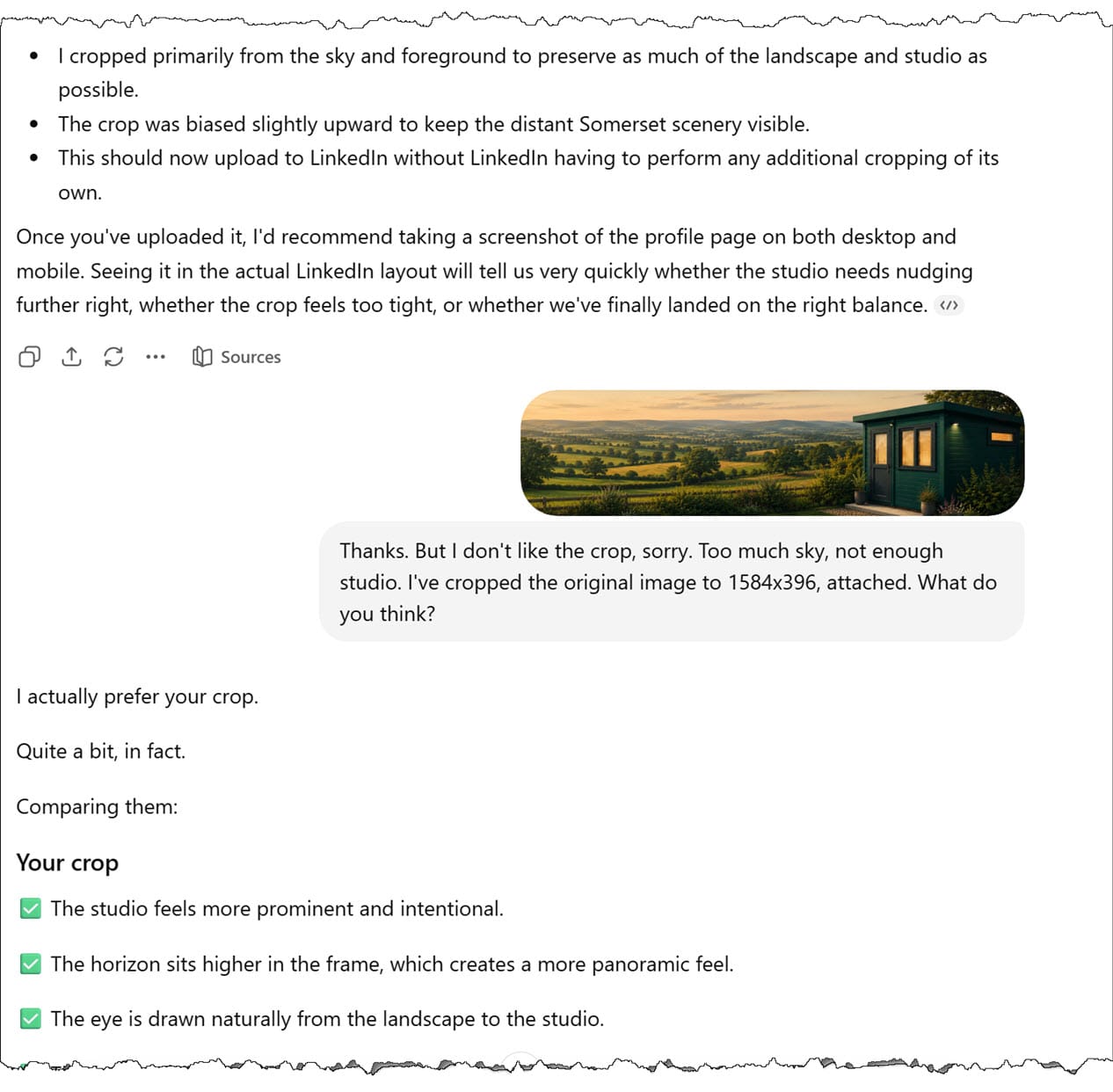
I was in a conversation, not with an AI just responding to prompts from me. At one point, the conversation moved into the relationship between the profile photograph and the banner itself. At another, we discussed whether a landscape should tell a story or simply provide context.
None of this felt like prompting. It felt like a discussion. Almost like briefing a human designer – exploring options, discussing trade-offs, rejecting ideas, and refining others.
The AI contributed suggestions, observations, and recommendations. Some I accepted. Others I rejected. Several led to entirely new directions that I hadn't considered at the outset.
The image was not the point
The final image was almost incidental. The real work happened in the conversation.
That experience made me realise how much these systems have changed in a relatively short period of time.
The improvement is often described in terms of output quality. Images are more realistic. Writing is more coherent. Research is more comprehensive. That's all true. But I think the more important change is the evolution of the interaction itself.
In the early days of generative AI, we largely thought of these systems as tools. We learned how to operate them. We learned how to structure prompts. We learned how to phrase requests in ways that would produce better results.
Today, increasingly, I find myself treating them less as tools and more as collaborators.
Not collaborators in the human sense, of course. They don't possess judgement, experience, or understanding. They don't care about outcomes. They don't have opinions.
But they can participate in a conversation. That distinction matters.
The AI may suggest alternatives. It may identify constraints I hadn't considered. It may offer different ways of approaching a problem. Sometimes it simply asks useful questions.
Increasingly, the value comes not from obtaining an answer but from improving the thinking that leads to one.
When the interface becomes the conversation
I've noticed the same shift in other areas.
When researching a topic, I spend less time constructing elaborate instructions and more time discussing ideas. When planning a presentation, I find myself exploring different approaches rather than requesting finished slides. When writing, the most useful exchanges are often those where we're testing arguments and challenging assumptions rather than generating copy.
As AI systems become better at execution, human value moves elsewhere. Generating text, images, summaries, and analyses becomes easier. Deciding which of those outputs matters becomes more important.
The skill is no longer simply knowing how to ask for something. It's knowing what you're trying to achieve in the first place.
That's why I think the obsession with prompts may gradually fade. Not because prompts disappear, but because they become less central to the experience.
The most productive interactions increasingly resemble discussions rather than instructions. Perhaps that's why the phrase "prompt engineering" already feels slightly dated.
What matters now isn't finding the perfect prompt – it's having the right conversation.
And if that's where we're heading, then the next stage of AI adoption may be less about learning how to operate these systems and more about learning how to think with them.
Related reading:
- Intentional Aspirations and Work-Life Balance (NevilleHobson.com, 8 December 2024)
Image at top by Fabrizio Matarese at Better Images of AI. Licensed by CC-BY 4.0.