

I am late to this particular party. Many people I know professionally are already using Claude, Anthropic's LLM-based advanced AI assistant and the most talked-about alternative to ChatGPT. Some of them are well advanced in how they use it. So arriving here now, in April 2026, feels a little like showing up after the food has gone cold and the drinks have run out.
But I'm here, and I'm doing it deliberately.
I have been deep in ChatGPT from when it first appeared on the scene in late 2022. There are things it does that I think are genuinely better than what Claude offers, although that comparison is for another post. What I want to do here is simply describe where I am right now and what I'm exploring.
This is not my first encounter with Claude. A few months after it launched in early 2023, I signed up, paid for it, and wrote about it on my now-archived WordPress blog. Then, for reasons that made sense at the time, I stayed with ChatGPT Plus. It became my default, my daily tool, my trusted assistant, the thing I reached for first.
What has changed is that I'm now running a proper, staged experiment – moving deliberately rather than impulsively. I have subscribed to Claude on the £18 a month Pro plan, and I'm taking time to actually learn how it works, rather than just using it.
The biggest revelation so far, and it genuinely surprised me, is Cowork, an agentic AI feature within the Claude desktop application that allows Claude Pro to execute multi-step tasks directly on your computer. I only started exploring Cowork properly this past weekend. The difference it represents compared to anything I have experienced with ChatGPT is significant. And no one is calling it a 'chatbot.'
I'm still early in understanding what it can do, but it has my full attention.
I'm writing detailed instructions in Cowork covering what Claude should know about me, what my goals are, and how I want to express myself in my writing (and how I don't). Alongside that, I'm working through Skills – structured capabilities that shape how Claude performs tasks.
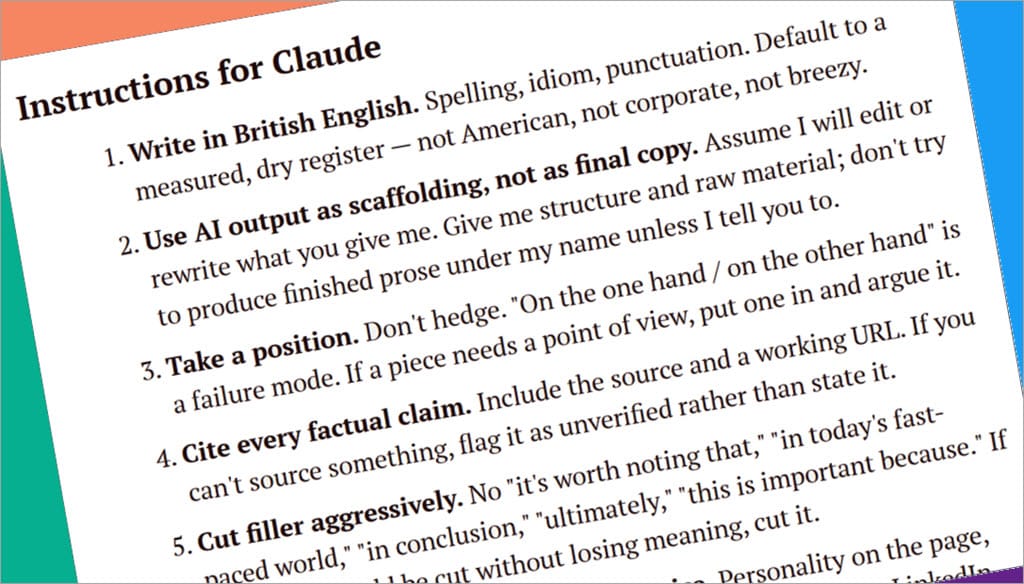
And I'm doing something I probably should have done more carefully with ChatGPT – building a proper foundation. It's the kind of groundwork that takes time but that, I suspect, makes a considerable difference to the quality of what you get back.
There is something that feels different about approaching an AI tool this way – with intention rather than habit. Whether that translates into a genuine, lasting shift away from ChatGPT, I honestly do not know yet. I'm not making that call on the basis of a weekend's experimentation.
What I do know is that Claude has my attention in a way it did not before. I will keep writing about this as I learn more (such as Projects and the Claude Code agentic coding system).
Are you exploring Claude? Where are you on the experiential curve?
Update – 30 April 2026
A week on from publishing this post, here is where things stand.
The most time-consuming part of the experiment so far has been setting up Cowork properly – preferences, writing style, dos and don'ts, the things I want Claude to know about me and my work. It takes time, but it is clearly essential. The difference it makes to everyday interactions is already notable.
Most of what I have been doing with Claude so far mirrors how I use ChatGPT – asking it to draft, review, research, summarise, respond, etc. But the comparison is instructive. Because the groundwork is in place, I no longer need to front-load each interaction with detailed context or instructions. Claude refers back to what it already knows. That removes friction in a way I had not fully anticipated, and so far it has been close to faultless – which suggests the instructions are doing their job.
One thing I had not anticipated is the frequency of platform errors. Status reports announcing outages of one kind or another appear almost daily, with progressive updates through to resolution.
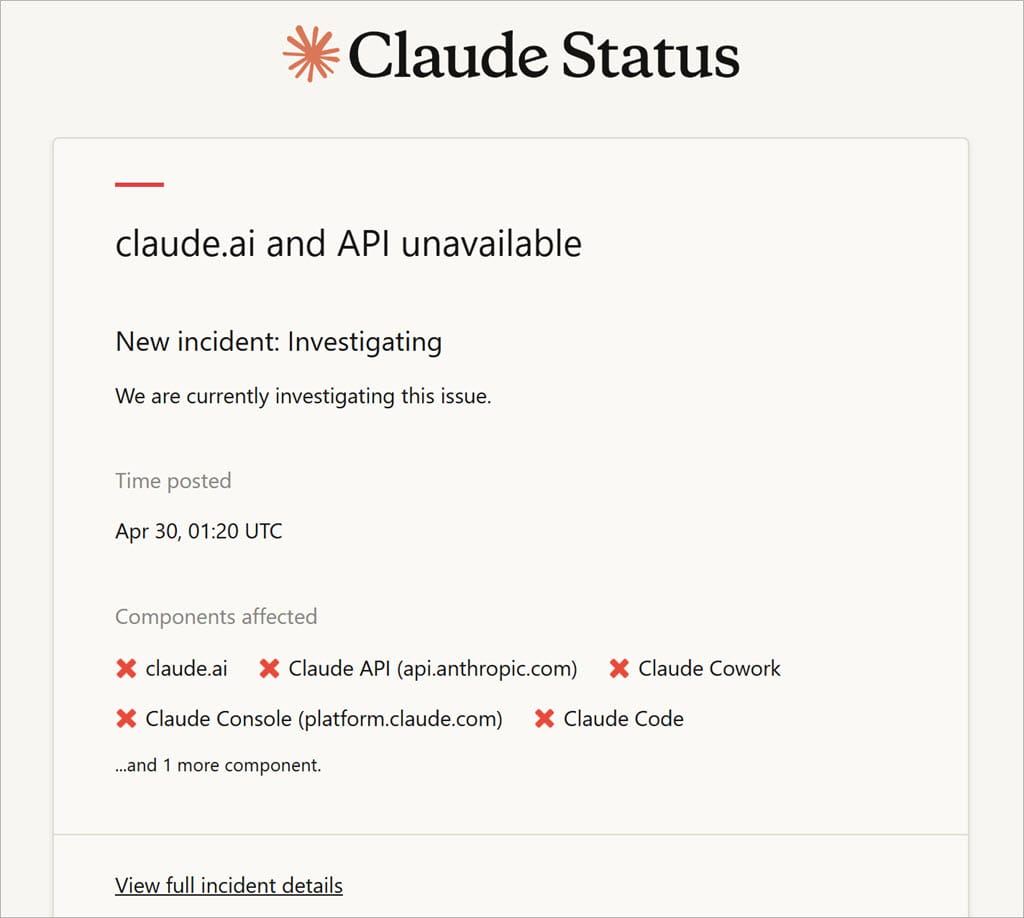
Fortunately, most seem to occur overnight my time, so the practical impact on my experiment has been minimal. Even so, the frequency surprises me – my sense is that it is considerably more than I have experienced with ChatGPT. As a result, I am backing up chats more regularly than I had originally planned.
I have not yet done much with the agentic side of the desktop app, nor gone deeply into Projects beyond the initial setup. Those are for later in the experiment.
For now, I am running Claude Pro and ChatGPT Plus in parallel, switching between them depending on the task. My working assumption is that if I find myself consistently reaching for Claude first, that will be the signal that a more permanent switch to Claude as the primary tool makes sense. That moment has not arrived yet – and I am not forcing it. Both tools are earning their place at the moment.
This is intentional, paced learning. No timetable, no pressure. Just paying attention to what works.
References:
- Claude Cowork by Anthropic (Anthropic)
- Cowork (Ruben Hassid, Substack, 9 April 2026)
- I've built dozens of Skills in Claude this year (Harriet Meyer, LinkedIn, 17 April 2026)
- How to create Skills: Key steps, limitations, and examples (Anthropic)
- The Complete Guide to Building Skills for Claude (PDF, Anthropic)
- Claude Pro: First impressions of Anthropic’s paid AI chatbot (NevilleHobson.com, 13 September 2023)
Photo at top by Rishabh Pammi on Unsplash