
There was a time when being a CEO meant making decisions, setting direction, and occasionally – just occasionally – reading your own emails.
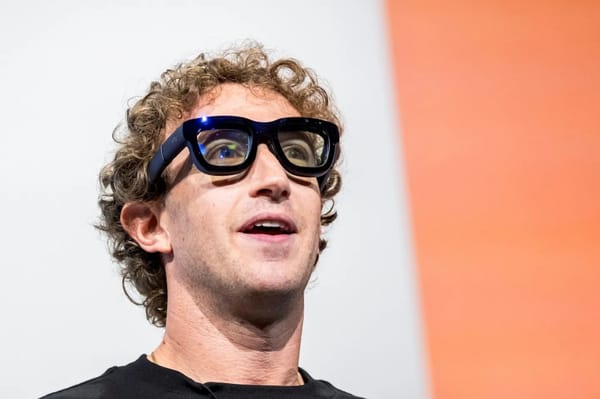
Now, according to a Wall Street Journal report this week, Mark Zuckerberg is building an AI agent to help him do his job.
Not to replace himself, you understand. Just to… assist.
The agent is still in development, but it’s already helping him retrieve information faster – answers he would otherwise have to obtain by going through layers of people.
Which raises an awkward question.
If the CEO no longer needs to go through layers of people, what happens to the layers of people?
Flattening the organisation, literally
This isn’t just a quirky side project. It reflects a broader shift inside Meta Platforms.
The company is pushing hard to accelerate work, flatten its organisational structure, and embed AI into everything it does.
Inside Meta, employees are already experimenting with personal AI agents that can access files, talk to colleagues – or even talk to other agents on their behalf. Yes, apparently, there is even a place where the agents talk to each other.
You can decide for yourself whether that sounds efficient or faintly unsettling.
One internal tool is described as something like an “AI chief of staff”. That phrase deserves a moment’s pause.
For years, the chief of staff role has been one of the most human jobs in any organisation – built on judgement, trust, nuance, and the ability to read a room.
Now we’re experimenting with software that can replicate at least some of that function.
Which leads to a second awkward question. If your AI can brief you, prioritise for you, and answer on your behalf, at what point does it start to decide for you?
A small step for Zuck, a giant leap for… management?
There is something undeniably compelling about the idea.
Who wouldn’t want an assistant that:
- Surfaces the right information instantly
- Cuts through organisational friction
- Saves hours of internal back-and-forth
From a productivity perspective, it makes perfect sense. From a human perspective, it becomes more complicated.
Those are harder to “retrieve”.
It’s hard to resist one final, slightly mischievous question. If every CEO ends up with a CEO agent, do we eventually reach a point where:
- The agent briefs the CEO
- The CEO agrees with the agent
- And the organisation executes what the agent suggested in the first place?
At which point, one might reasonably ask: who, exactly, is in charge?
There's a serious point beneath the humour
Joking aside, this story is a small but telling signal.
AI is not just changing how work gets done. It is starting to reshape how leadership itself is practised. And perhaps more importantly, how it's perceived.
If leadership becomes something that can be augmented – or partially automated – then the value of being human in that role becomes both more important, and less obvious.
I find myself both impressed by the elegance of the idea – and slightly uneasy about where it leads.
That tension is only just beginning.