Generative AI is changing the way we find information online. Its impact on Wikipedia has made me reflect on how my own habits are changing, too.
I've been a regular Wikipedia user for years. It's often where I go when I want to learn more about a person, an organisation, or a particular subject. I know I'm likely to find not only the information I'm looking for, but also links to sources that will help me explore the subject further.
It's a resource I value and trust, although, as with any source of information, I don't take everything I read there at face value.
But I've noticed something about my own behaviour recently.
Increasingly, I find myself asking Gemini in Chrome questions about things I might otherwise have explored on Wikipedia. I get a useful answer, perhaps ask a follow-up question or two, and move on.
It's remarkably convenient. And I suspect many of you are doing something similar.
In October last year, I wrote about the challenges AI poses to Wikipedia, prompted by some interesting research reported by Euronews.
One thing that concerned me then was the prospect of Wikipedia becoming gradually less visible as more people encountered its knowledge through AI-generated answers rather than visiting the site itself.
A year on, I find myself contributing to that very trend. And some of the more recent findings from the Wikimedia Foundation have given me further food for thought.
The Wikipedia paradox
Shortly after I wrote that post last year, the Wikimedia Foundation reported an approximately 8% year-on-year decline in human pageviews over several months. It attributed the trend partly to generative AI and changing habits in how people find information.
Its assessment of global trends, published in July 2026, makes for interesting reading. The decline in readership is accompanied by a decline in the overall number of active editors across Wikimedia projects.
The Foundation's annual plan for 2026–2027 estimates that around five billion internet users consume Wikipedia content in some form. That's an extraordinary reach for a project that began 25 years ago.
Here is a project whose mission is to make knowledge freely available to everyone. AI is helping it do precisely that. Surely that's a good thing? I believe it is – very much so. But there's another side to it.
Wikipedia isn't just an enormous collection of information. It's a community of people who research, write, edit, check references, correct mistakes and argue about how things should be presented. Much of that work is voluntary.
I wonder how many of those volunteers first got involved as regular readers. And what happens if fewer people ever make it to Wikipedia in the first place?
It's a concern shared by Wikimedia Foundation CEO Bernadette Meehan, who, in an interview with Axios in October, pointed out that fewer readers means fewer potential new editors.
The same applies to the people who donate money to support it. If you're getting Wikipedia's knowledge through Gemini, Claude, or ChatGPT, you're unlikely to encounter those familiar donation appeals.
The Foundation is well aware of these challenges. It's working with technology companies through Wikimedia Enterprise, providing commercial access to its content in ways that help support the project financially.
But there's something here that goes beyond money. How do you sustain a community when the people who benefit from its work become increasingly disconnected from it?
A question for anyone who publishes
There's a certain irony in all this for me.
I've been exploring ways to make the content I publish here on Studio6 more accessible to AI systems, including some recently introduced features in Ghost, the publishing platform I use.
It's part of what's becoming known as generative engine optimisation, or GEO – essentially, helping AI systems discover and make sense of what you publish.
I'm interested in how my writing might reach people who increasingly turn to AI rather than traditional search. Yet my experience with Wikipedia makes me wonder about the other side of that ambition.
What happens if I succeed in making my writing more discoverable by AI, but fewer people actually come here to read it? Perhaps someone encounters an idea from one of my posts in an AI-generated answer. They find it useful. It informs their thinking. They may even share it with others.
But I might never know any of that happened. And they might never know where the idea came from.
That brings me back to the thought I expressed in my post last year about Wikipedia's gradual invisibility. It's a possibility that anyone who publishes on the web might want to consider.
And for those of us involved in communication, it raises some intriguing questions about what we mean by reach, engagement and influence. How do we even begin to measure them when so much happens beyond our view?
There's another aspect of visiting Wikipedia that I value, too. I'll go there to learn about something specific, follow a few links, explore related articles and sometimes find myself reading about something quite different from what I originally went there to discover.
Getting an answer from Gemini can be the end of my search for information. Finding something on Wikipedia is often just the beginning.
A little more curiosity
I'll continue using Gemini in Chrome. It's too useful not to. But thinking about Wikipedia's predicament has made me a little more conscious of the human effort behind the answers I receive.
Perhaps I'll make a greater effort to follow those links to the original sources. Not only to check the accuracy of what an AI tells me, but also out of curiosity about what else I might discover there.
And perhaps I'll spend a little more time on Wikipedia itself. After all, someone has to help keep Wikipedia up to date.
And that someone isn't Gemini.
Sources:
- Wikimedia's CEO on the AI traffic armageddon - Axios, 2 October 2026
- Global Trends 2026 - Maryana Pinchuk, Wikimedia Foundation, 16 July 2026
- Wikimedia Foundation Annual Plan/2026-2027
- New user trends on Wikipedia - Marshall Miller, Wikimedia Foundation, 17 October 2025
- Wikipedia is holding its own – but AI poses major challenges - Studio6, 8 October 2025
- Wikipedia isn’t dead yet, but AI poses major challenges, study finds - Euronews, 4 October 2025
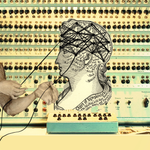
(AI-generated illustration at top created with ChatGPT.)