
Since late February 2026, the United States and Israel have been engaged in a sustained military campaign against Iran, targeting its leadership, nuclear programme, and military infrastructure. Iran has responded with missile and drone attacks against Israel, US bases, and allied countries across the Middle East, widening the conflict across the region.
What began as a series of coordinated strikes has quickly evolved into a broader regional crisis. Attacks have spread beyond Iran and Israel to neighbouring states, disrupted global shipping routes and oil supplies through the Strait of Hormuz, and raised fears of escalation across multiple fronts, not to mention a growing global economic crisis.
Alongside the military conflict, another front has emerged – less visible, but no less consequential.
When communication is part of the conflict
Last week, a report in The Guardian described how Iran has overhauled its social media strategy in response to US and Israeli military attacks. What stood out wasn’t just the scale of the activity, but the clarity of intent: this is an all-out information war, running in parallel with events on the ground.
Since then, further reporting has added another layer to that picture. As The New York Times reported a few days ago, this is not just a single actor pushing messages: it is an ecosystem where state media, influencers, AI-generated content, and platform dynamics combine to move narratives across borders at speed.
The shift is striking.
What were once broad, multi-issue influence campaigns have become tightly focused, single narratives tied directly to the war. Content is pushed rapidly across platforms like X, Instagram, TikTok, and Bluesky, designed to exploit existing divisions – particularly within the United States.
Some of that content is generated by AI. Videos, memes, even fabricated footage purporting to show successful strikes or emotional reactions from soldiers. Not necessarily to convince everyone, but to provoke, to unsettle, and to amplify doubt.
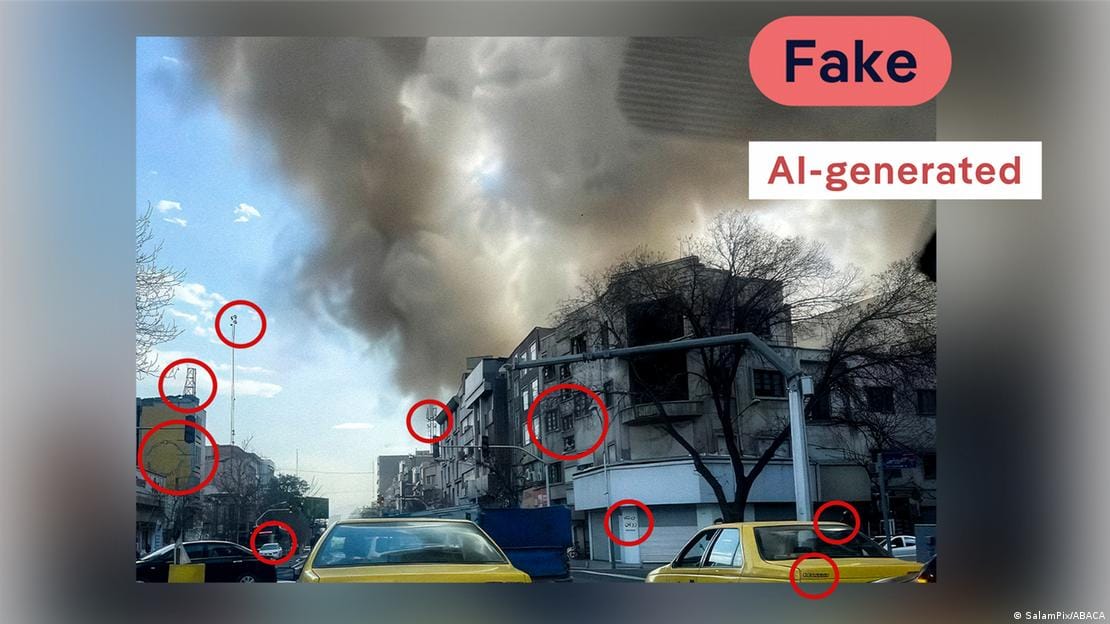
But what matters just as much is how that content moves.
A narrative might begin with a broadcast from state media. It is picked up and reshaped by online influencers. AI-generated media reinforces it. Then it is amplified across networks – sometimes aligned, sometimes opportunistic – until it reaches a global audience.
By that point, its origin is almost invisible.
At the same time, inside Iran, access to information is being restricted through near-total internet shutdowns and intimidation of those who might challenge the official narrative
Control outward, control inward – two sides of the same strategy. This is what analysts call asymmetric warfare.
When you cannot match your opponent in conventional terms, you compete where the barriers are lower, and the impact can still be significant. Today, that means the information environment.
This is not happening in isolation. Reporting suggests that narratives are not only created but also amplified through networks that extend beyond a single country, involving aligned state media, proxy accounts, and loosely coordinated actors.
This is less a campaign than a system – and this is where things become uncomfortable.
The tools and techniques being deployed are not unique to state actors. They are extensions of the same systems that underpin modern communication – targeting, amplification, emotional resonance, and speed.
In other words, the infrastructure of everyday digital communication is also the infrastructure of information warfare.
When human-centred AI meets reality
Earlier this month, I wrote about human-centred AI in warfare and the idea that our use of these tools should reflect human values – dignity, accountability, and transparency.
But what happens when those same tools are used in a context where the objective is not understanding, but advantage?
AI does not introduce deception into communication. It accelerates and scales it. It lowers the cost of producing content that looks and feels real, regardless of whether it is. And it does so in combination with human intent.
In a conflict setting, that changes the balance.
Truth becomes slower than narrative. Verification lags behind visibility. And by the time something is proven false, it may already have done its work.
Recent analysis from crisis communication expert Philippe Borremans reinforces this shift. Writing about the current conflict, he argues that events have compressed years of theory into days, exposing how quickly traditional crisis assumptions break down.
In one example, misinformation spread within minutes of an event, while verified explanations took hours to emerge – by which time the narrative had already taken hold.
Philippe's conclusion is a practical one: the question is no longer whether organisations can respond quickly, but whether they are structured to respond at all. In an environment where channels themselves are contested, and information moves at speed, conventional communication planning may simply be too slow.
The role of communicators
For those of us working in communication – not in conflict, but within the same information environment – this raises a more difficult question than simply identifying misinformation.
What is our responsibility in an environment where the system itself rewards speed over accuracy, emotion over evidence, and reach over reflection?
It is tempting to see information warfare as something that happens “out there” – the domain of governments and intelligence agencies. But the dynamics are not separate from our world. They are extensions of it.
Most communicators are not participants in these campaigns. But we operate within the same systems that make them possible.
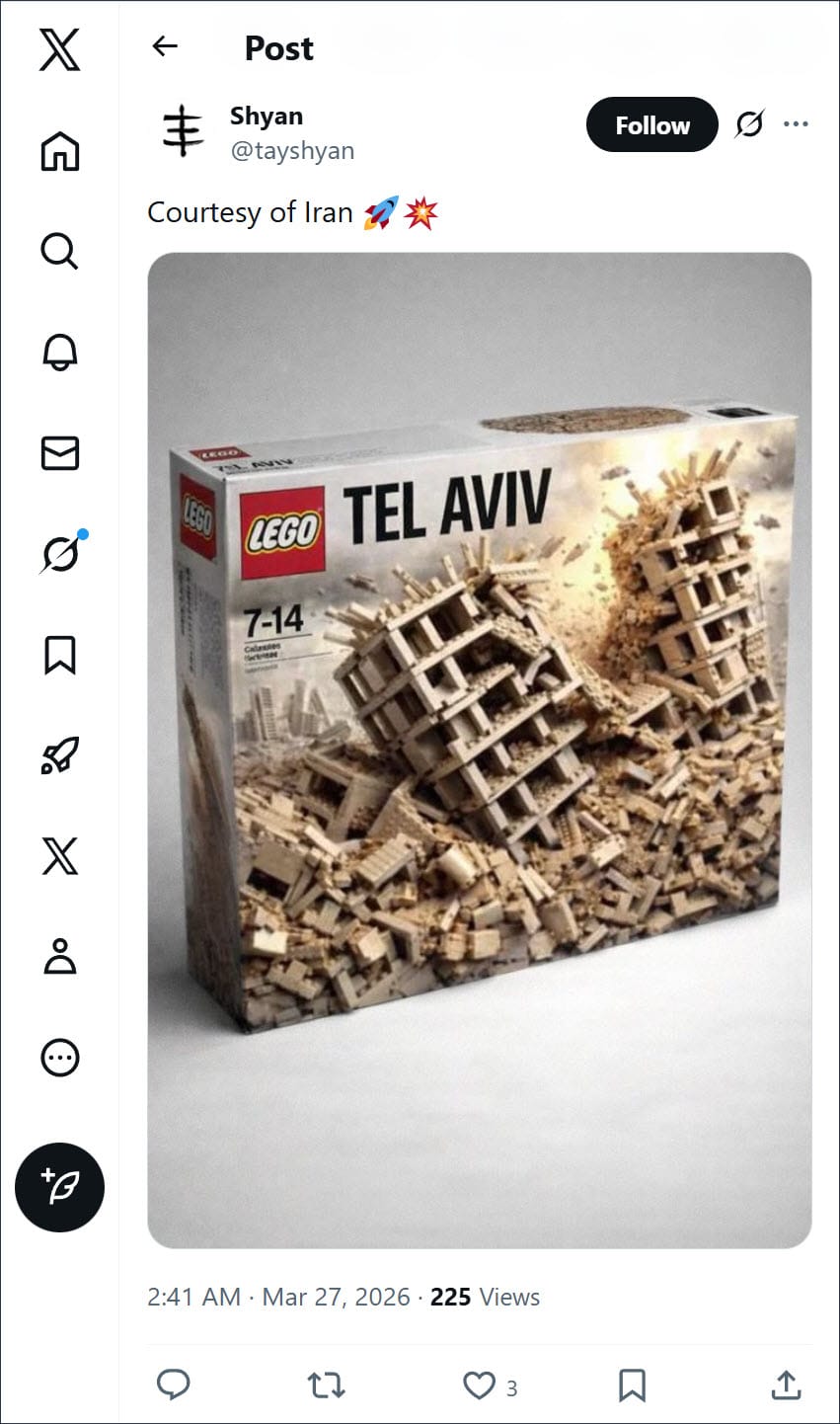
The same pressures that shape corporate messaging, public relations, and social media strategy – the demand for immediacy, the pursuit of engagement, the reliance on platforms we do not control – are present here, just intensified.
And, increasingly, operating in an environment where the guardrails that once constrained misleading or manipulative content appear weaker or more unevenly applied.
It's where speed matters more than substance. Where visibility can be manufactured. And where authenticity is increasingly difficult to distinguish from simulation.
If that is the case, then information warfare is not an exception. It is an expression of the system as it now exists.
What this means
For communicators, the challenge is no longer just about crafting clear messages or building trust. It is about navigating a landscape where trust itself is under constant pressure.
Where the question is not simply “is this message effective?” Instead, it's “what does responsible communication look like in a system that often rewards the opposite?”
That is not a question with an easy answer, but it may be the one that matters most.
Perhaps the most striking thing about this moment is not the sophistication of the tools or the scale of the activity. It is how familiar it all feels.
That's not because we have seen it before in this form, but because the underlying dynamics – speed, amplification, division, persuasion – are the same ones we engage with every day.
Only now, the stakes are much higher.
Sources:
- In an Asymmetrical War, Iran Seeks an Edge With Its Information War (The New York Times, 28 March 2026)
- Iran's propaganda machine trolls Trump (NPR, 28 March 2026)
- Iran targets US public opinion with online information war (France24, 25 March 2026)
- Iran social media strategy pivots to information war amid US-Israel attack (The Guardian, 22 March 2026)
- Fact check: How fake images from Iran misled media outlets (DW, 19 March 2026)
- White House's use of internet memes to promote Iran war sparks criticism (PBS, 19 March 2026)
- Trump accuses Iran of using AI to spread disinformation (Reuters, 16 March 2026)
- What the 2026 Middle East War Is Teaching Us About Communications (Philippe Borremans, 14 March 2026)
- AI-generated Iran war videos surge as creators use new tech to cash in (BBC, 7 March 2026)
- How AI Is Turbocharging the War in Iran (The Wall Street Journal, 7 March 2026)
- When human-centred AI meets the realities of war (6 March 2026)
- 2026 Iran War (Wikipedia)
- Asymmetric warfare (Wikipedia)